

A school-based health center (SBHC) is a student-focused health center or clinic:
- located at or near a school or schools,
- organized through school, community, and health provider relationships,
- that provides age-appropriate, clinical health care services on-site by qualified health professionals.
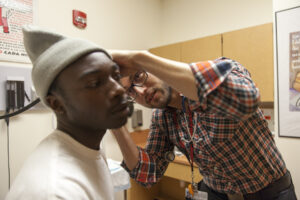
Photo: La Clínica de La Raza
A school-based health center may provide primary medical care, behavioral health services, or dental care services on-site or through mobile or telehealth.
Staff vary in size, and typically includes nurse practitioners, nurses, mental health providers, as well as part-time physicians and medical students.
Services are provided at no or low cost. No one is refused service for inability to pay.
The American Academy of Pediatrics considers SBHCs to be an important way for students to get access to care and—because they are mostly located in communities with a high proportion of historically disadvantaged populations—an effective way to advance health equity.
A Growing School-Based Health Care Movement
As the statewide nonprofit working to advance school-based health centers, our goal is to grow the number of SBHCs in California to 500 by 2030.
In 2000, California had 108 SBHCs; today, there are 377. Across California, more than 340,000 students attend a school that has a health center, and many more have access to other types of school health services.
State Overview
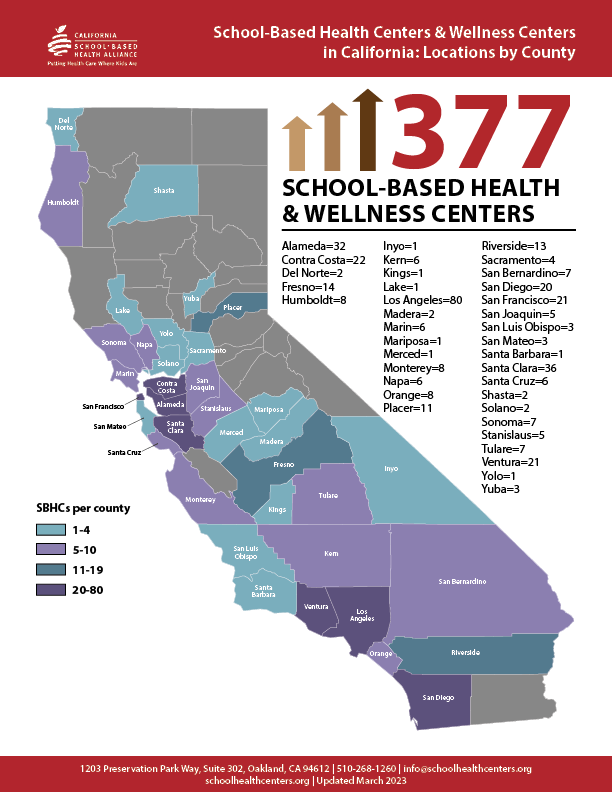
School-based health and wellness centers are an innovative way to help ensure that children and youth have access to health care and do well in school. California has 377.
See Impact & Locations
School-Based Health Centers Are Effective
SBHCs put health care where students already spend most of their time – at school. They offer:
- Enhanced access to health care by bringing it directly to where students and families are and conducting active school-based outreach to connect students with care.
- Stronger prevention and population health by connecting clinical care with public health approaches such as group and classroom education, school wide screenings and prevention programs, or efforts to address the social determinants of health.
- Intensive support for the highest need students by being present on a daily basis to manage chronic disease, address behavioral health issues, deal with crises, and help students and families access resources.
- Support for the school’s mission to improve academic achievement by working together to address absenteeism, school climate, and classroom behavior and performance.
- Integration into the health care system by communicating and coordinating care with other providers and payers.
Research has shown, and teachers and educators intuitively know, that healthier children are better students because they are able to focus in class and are not distracted by hunger, pain, stress, or a chronic illness.
Learn more about how SBHCs in California are serving students and take a virtual tour!